
Gog Magog
https://mf.b37mrtl.ru/files/2024.04/xxl/66193fb985f540143f589156.jpg
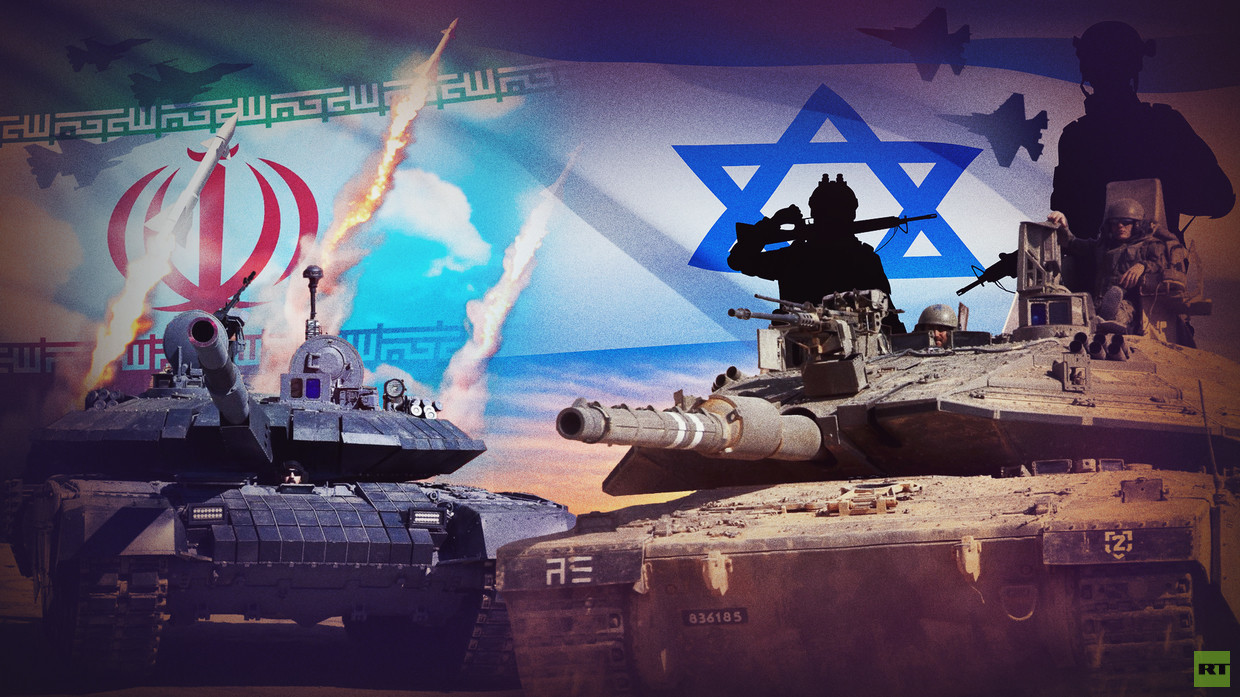
Shia Army: How Iran formed a ring of enemies around Israel
What resources will Tehran be able to use in response to the attack on its consulate in Syria?
2 Apr, 2024 17:14 rt
https://mf.b37mrtl.ru/files/2024.04/xxl/660c3c3a2030275e566a319f.jpg
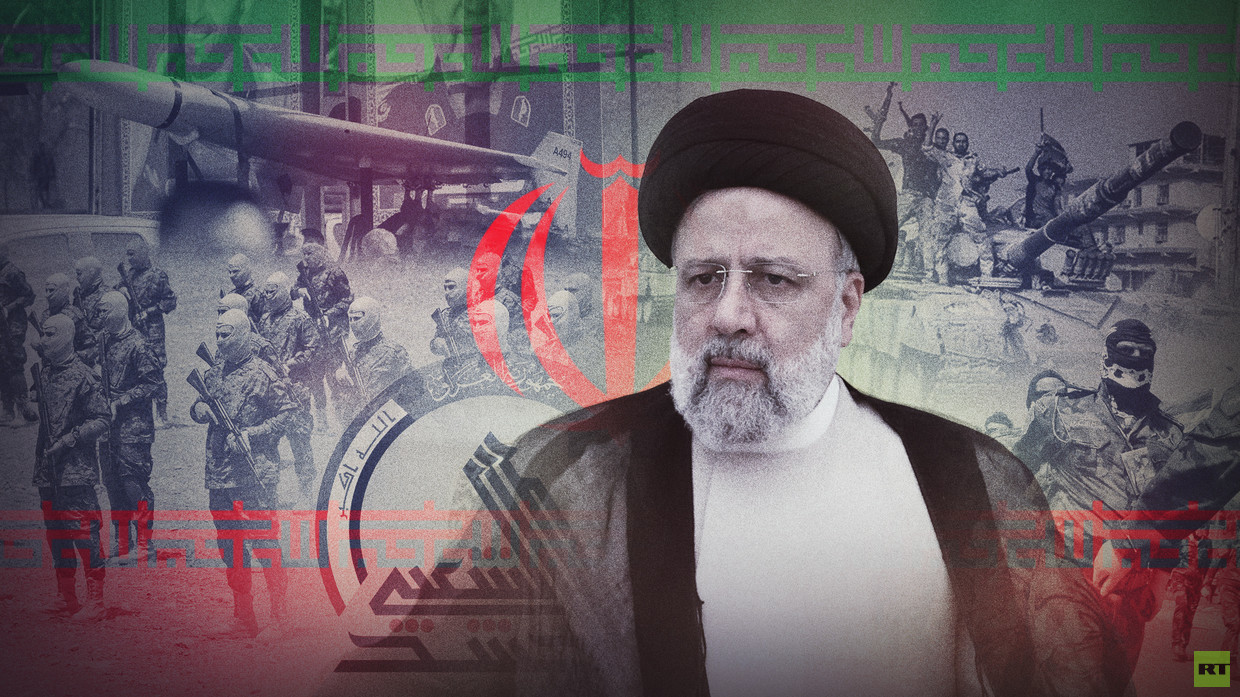
On Monday, the Israeli Air Force struck a building near the Iranian embassy in the Syrian capital. As a result of the attack, the consulate building was destroyed and the commanders of the Iranian Islamic Revolutionary Guard Corps (IRGC) unit, Generals Mohammad Reza Zahedi and Mohammad Hadi Haji Rahimi, were killed.
President Ebrahim Raisi has already warned that “this unfair crime won’t go unanswered.”
“Zionists must know that they will never achieve their sinister goals with such inhumane actions and, day by day, the resistance front and the disgust and hatred of free nations against their illegitimate nature are being strengthened, and this cowardly crime will also not go unanswered,” he said.
What the answer will be is still unknown. However, in recent years, Tehran has managed to become a full-fledged superpower in the region, with support in many countries in the Middle East.
Shadow of Iran
The escalation of the conflict in Gaza, which started with the Hamas-led invasion of Israel last October (“Operation Al-Aqsa Flood”) and the Israel Defense Forces’ (IDF) subsequent military operation that claimed tens of thousands of lives, gave rise to much speculation about the weakness and short-sightedness of the Israeli leadership and the exceptional military training of Israel’s opponents. And it’s not just Hamas that we’re talking about, but Iran.
Iran was immediately accused of being involved in the Hamas attack. The WSJ reported that Iran had trained the Palestinians and instructed them on how to break through the Israeli border.
Moreover, it was said that Tehran had green-lighted the attack. The detailed coordination of the operation allegedly took place during a meeting between senior members of Hamas, Hezbollah, and two other Iran-backed militant groups in Beirut shortly before October 7. Officers of the IRGC also attended the meeting.
Later, the IRGC stated that the Hamas attack had been planned as revenge for the 2020 murder of the head of the Quds Force (part of the IRGC), General Qassem Soleimani. However, rumors about Iran’s direct involvement in the anti-Israeli operation haven’t been verified.
On November 3, 2023, the secretary general of the Lebanese movement Hezbollah, Sayyed Hasan Nasrallah, publicly stated that Iran had not been involved in operation Al-Aqsa Flood.
“The decision behind this operation was 100% Palestinian, and its implementation was 100% Palestinian. [It was launched] in order to draw the attention of the whole world to this problem. Its planners hid it from everyone, even from the movements of the Axis of Resistance,“ he said.
“Absolute secrecy is what ensured the brilliant success of the operation through the element of astonishing surprise. The Islamic Republic of Iran publicly supports the resistance movements but it does not exercise any guardianship over them [or] over their leaders.”
On the one hand, this statement made by the leader of Iran’s main proxy force in the region marked the lines which Iran was not ready to cross. On the other hand, Nasrallah reminded the world that Iran was able to confront Israel and its allies without starting World War III. In fact, the Axis of Resistance – an informal regional alliance between several Middle Eastern nations and political organizations which oppose the West and Israel and are united by Shiite ideology – was created for this very purpose.
In a way, Iran has created the world’s most successful coalition, which proved itself capable not only of restoring order in the region and fighting terrorism, but also challenging global forces.
The “Party of God” heads the resistance
After the explosion in the port of Beirut, when chaos reigned in Lebanon, I talked with one of my friends from Hezbollah. At the time, he assured me that it was largely due to the efforts of Hezbollah that the country didn’t fall into the abyss. And yes, Iranian funding had a lot to do with it. After all, Hezbollah is made up of ordinary Lebanese people who support their country’s economy. However, it would not be fair to say that Hezbollah is totally dependent on Iran and subordinate to it, since Iran has a special relationship with the countries that are part of the Axis of Resistance. However, to gain a deeper understanding, let’s start from the beginning.
https://mf.b37mrtl.ru/files/2024.04/original/660c085e85f5405893200d17.jpg
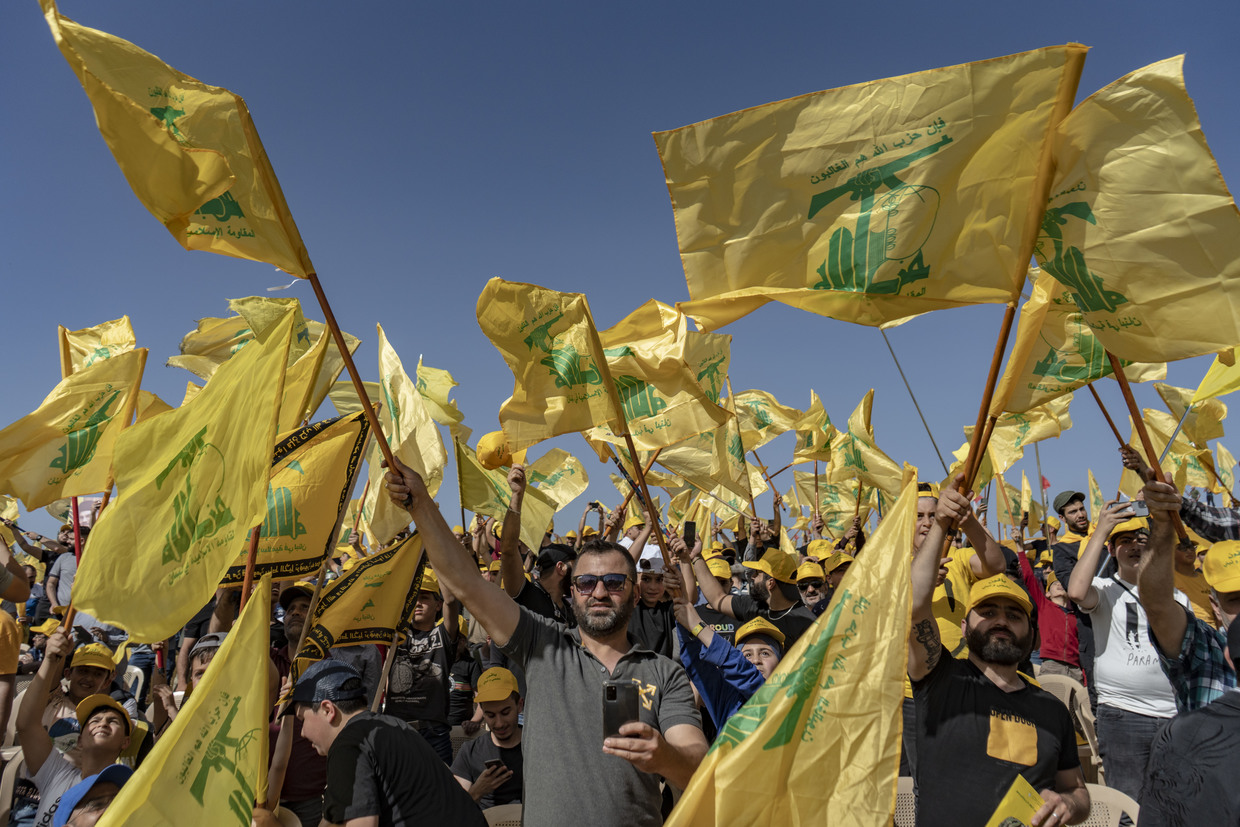
The roots of Hezbollah go back to the early 1960s, when a clerical movement arose in Lebanon that wanted to revive the key principles of Islam. The idea was proposed by several Muslim theologians who had just returned from Najaf, Iraq, where they had been studying in Shia seminaries. Two of these people are particularly noteworthy.
The first is Imam Musa al-Sadr, who was educated in Qom, Iran. He embarked on his political journey in the Lebanese city of Tyre, but his activities soon spread throughout the country. Al-Sadr was very popular, he often spoke at various mass cultural and educational events and surrounded himself with prominent intellectuals from various backgrounds. In 1967, he created the Supreme Islamic Shia Council (SISC), an official religious institution that supported the Shiite community. Many politicians, even those who shared Sadr’s faith, disapproved of this. Nonetheless, al-Sadr continued his political activities. He founded the Movement of the Oppressed and a military group to fight against Israel, called the Lebanese Resistance Regiments (the Amal Movement). In all his sermons, the Imam called for war with Israel. Eventually, Al-Sadr was abducted in Libya, where he came at the invitation of President Muammar Gaddafi on August 31, 1978. His fate remains unknown.
The Imam’s work continues
Modern-day Hezbollah is associated with the name of another Muslim theologian, Ayatollah Muhammad Husayn Fadlallah. This prominent Shiite scholar built a cultural center that included a mosque and a religious school in east Beirut. After moving to the southern suburbs of the city, he led prayers at the Imam al-Rida Mosque and became involved in politics, drawing on the experience of the 1979 Islamic Revolution in Iran. Fadlallah founded the Association of Charitable Organizations, which united many educational, religious, and social institutions. This organization played an important role in the further development of Hezbollah, and Fadlallah himself has been called its leader, although he claimed that this was not true. Gradually, the organization grew, it established a power vertical and acquired symbolic attributes. The Israeli invasion of Lebanon in 1982 greatly contributed to the development of Hezbollah.
In Lebanon, there was an urgent need to create a single Islamic organization that would unite all Shiite groups. Islam was to become the intellectual, religious, ideological, and practical foundation of the proposed political party. The party’s main goal was to resist the occupation, and its leader was to be a sayyed – i.e. a descendant of the Prophet Mohammed.
Nine representatives of the main Islamic groups held a meeting, and issued a document known as the Manifesto of the Nine. This manifesto was sent to Ayatollah Khomeini in Iran, who approved it.
The manifesto was then adopted by the majority of the religious groups in Lebanon. Their leaders dissolved existing partnerships in favor of a single new structure, which became known as Hezbollah. One of the prominent leaders of the movement, Sheikh Naim Qassem, in his book ‘Hezbollah: The Story From Within’, wrote that the Lebanese Shiites enlisted the support of Tehran from the very beginning. The guardians of the Islamic Revolution were given an order to support the allies in their fight against Israel, primarily through military training and the provision of necessary infrastructure. A delegation of high-ranking Iranian military officials came to Syria, and Damascus agreed to deploy the IRGC to Lebanon.
Training camps were set up in Lebanon’s Bekaa region, and a system was developed that included military, religious, and moral training of the fighters. Young people flocked to the training camps. The experience of the Palestinian resistance was also taken into account. All this yielded results in the war with Israel and later allowed Hezbollah to become an official political force that represented the interests of a large part of the population.
Today, Hezbollah continues to build up its military forces, despite external and internal pressure (certain forces in Lebanon speak in favor of disarming the movement). Hezbollah’s military arsenal includes dozens of types of missiles and drones. The group also has ballistic missiles with a range of between 500km and 700km. According to its secretary general, Hezbollah has around 100,000 fighters.
Iran supports Hezbollah with hundreds of millions of dollars each year. Today, the group takes an active part in the Palestinian conflict. According to a recent report, the organization conducted 1,194 military operations on the Israeli border, leading to heavy losses on the Israeli side– an estimated 2,000 people were killed and wounded and hundreds of pieces of military equipment were destroyed.
Iran’s influence in Iraq
In early September, I went on a pilgrimage to Iraq for the annual Arbaeen March, which gathered tens of millions of Muslims from all over the world. We walked 82km from the city of Najaf (which Shia Muslims consider sacred) to the city of Karbala, and throughout this journey, I couldn’t help but wonder how well everything was organized. The people were provided with food, medical services, transport and, most importantly, their safety was ensured. This was largely possible due to the assistance of Iran, which traditionally helps organize this important event for Shia Muslims.
However, just a few decades ago (from 1980-1988), Iraq and Iran were in the midst of a bloody war. In eight years, this conflict claimed the lives of hundreds of thousands of people on both sides. The fact that both countries are considered centers of Shia Islam added to the problem. The main centers of religious education are located both in Iraq and Iran – in the cities of Najaf and Qom, respectively. The main spiritual authority in Iraq is its supreme leader, while in Iraq it is the great Ayatollah Ali al-Sistani. As a result, the Shiites in Iraq became divided based on whether they were oriented towards Iran or Iraq.
The country’s most powerful political forces are connected with Tehran and, as a result, Iraq has become one of the important centers of the Axis of Resistance. This has been clearly demonstrated by the current conflict in Palestine. For example, in November of last year, it was reported that US military bases in Iraq and Syria had been attacked 58 times since the start of the Hamas operation on October 7.
The high level of coordination between the groups which carry out the attacks and Tehran is quite obvious. At the end of January 2024, the media reported that the strike on the US base was carried out a few hours after Iran vowed to avenge the attack on IRGC forces in Damascus. According to some reports, the militants were members of Iraq’s Shiite militia Harakat al-Nujaba. However, many similar groups operate in Iraq.
Popular Mobilization Forces (Al-Hashd Al-Shaabi)
The Popular Mobilization Forces are the largest and most powerful paramilitary group in Iraq. Some reports claim that it became the third-largest military force in the country last year. Official reports show that, from 2001 to 2003, the Popular Mobilization Forces doubled in number – from 116,000 fighters to 238,000. In comparison, the number of soldiers in the regular army increased by 25,000 (to 450,000) over the same period, while the number of police officers in the country increased by 22,250 (to 700,000). The growth is explained by the active financing of this Tehran-backed group.
The need for such an organization arose after the city of Mosul was captured by Islamic State (IS) terrorists in June 2014. At the time, 1,500 terrorists forced thousands of soldiers to flee the city. Prior to this, IS terrorists had captured the cities of Hit, Fallujah, and most of Anbar province. It became obvious that the Iraqi Army was not able to cope with IS. At that time, Iraq’s government decided to integrate the militia into the country’s security services, and Iraq’s Ayatollah Ali al-Sistani issued a ‘fatwa’ on the “righteous jihad” against IS on June 13, 2014. He called on the people of Iraq to take up arms and defend “their country, their people, and their shrines,” and to join the security service. The fatwa strengthened the authority and legitimacy of the Popular Mobilization Forces. In light of the threat posed by IS, intra-Shiite competition subsided and Iran’s influence in Iraq grew.
In June 2014, the city of Tikrit was captured by terrorists and 1,700 military personnel were brutally executed (this is known as the Camp Speicher massacre). The shocking footage quickly spread on social media, and the Popular Mobilization Forces gained public support which increased even more after the fighters managed to push IS out of Tikrit. In April 2015, the city was liberated.
The fighters from the Popular Mobilization Forces were assisted by the IRGC’s Quds Forces, led by Iranian General Qassem Soleimani. To this day, the Popular Mobilization Forces continue to maintain close military, intelligence, and financial ties with Tehran. It became a legal organization at the end of 2016, when the Iraqi parliament legislated for its status. The Interior Ministry listed more than 67 different brigades, which belonged to the umbrella organization. It is important to note that not all brigades are Iranian proxy forces. However, the Badr Organization and Kataib Hezbollah are considered the most authoritative pro-Iranian groups.
By 2019, the Popular Mobilization Forces included both fighters who were oriented towards Iran and those who recognized the authority of Ayatollah al-Sistani.
The Badr Organization
This group came into existence a long time ago. During the Iran-Iraq War, it helped Iran fight against Saddam Hussein. Hadi al-Amiri – the organization’s leader and experienced field commander – was one of the few people whom IS militants truly feared in 2014. Al-Amiri publicly declared his support for Iran. In 30 years, he had come a long way – from a guerrilla fighter who took part in the Iran-Iraq war on the side of Tehran, to a military commander in charge of one of Iraq’s best Shiite brigades. He also served as the Iraqi transport minister. Al-Amiri had gone from a national traitor to an Iraqi hero who was considered a key figure in the fight against IS.
In 2019, the US accused al-Amiri of attacking the US embassy. The attack was a response to US air raids on the militia bases of Kataib Hezbollah, which is allied with Iran.
Kataib Hezbollah
The Iraqi branch of Hezbollah, formed in 2003, has up to 30,000 fighters. Like the Badr Organization, Iraq’s Hezbollah publicly supports Iran, and is oriented towards the Islamic Republic and its supreme leader both spiritually and politically. The group took an active part in resisting US forces during the Iraq War. It also fought against terrorists on the side of Syrian President Bashar Assad. According to some reports, Kataib Hezbollah fighters are trained by instructors from the Quds Forces, which are part of Iran’s IRGC.
The US believes that the recent attack in which three US soldiers were killed on the Jordan-Syria border was carried out by Kataib Hezbollah. The Pentagon publicly declared this. Meanwhile, the militants have claimed responsibility for more than 150 attacks on US troops since the start of the war in Gaza in 2023.
The group used to be headed by Jamal Jafar Ibrahimi, better known as Abu Mahdi al-Muhandis, who came from Basrah, Iraq. However, he died on January 3, 2020 as a result of a US airstrike near Baghdad Airport. The legendary Iranian general, the head of the Quds Force, Qassem Soleimani, was also killed at that time. Al-Muhandis was Iraq’s deputy national security adviser, a member of the Iraqi parliament, and the deputy head of the Popular Mobilization Forces.
In addition to the above-mentioned groups, which operate under the auspices of the Popular Mobilization Forces, we may also note the Iraq-based militant groups “Imam Ali Brigades,” “Harakat Hezbollah al-Nujaba,” and “Saraya al-Khorasani.”
Iran’s influence in Syria
It would not be an exaggeration to say that, during the war against terrorists that began in 2011, Iran, along with Russia, played an important role in saving Syria. From the start of the conflict, Iran sent volunteer fighters, military equipment, medicine, fuel, and ammunition to Syria. Tehran opened a line of credit and allocated huge funds to support the government in Damascus. This helped Assad hold out until 2015, when Russia’s Air Force came to the aid of Syria and radically changed the situation at the front.
During the war years, Iran formed many paramilitary groups in Syria that helped the Syrian Army. However, Shiite militias in the country preserved their independence and were never directly subordinate to the official command of its army.
‘Russia is very important for protecting Palestinians’: Top Hamas official talks to RT about the conflict with Israel
https://www.rt.com/news/595069-hamas-us-port-gaza
‘Islamic world will celebrate the destruction of Israel’: Is war inevitable between Tehran and West Jerusalem?
What will the Islamic Republic’s response be to the attack on its embassy in Syria?
12 Apr, 2024 14:21 RT
The Israeli strike on the Iranian consulate in Damascus on April 1 left political experts and millions of people around the world wondering whether the attack will lead to a direct war between the two nations. Iran has every reason to retaliate, since the Vienna Convention on Diplomatic Relations of 1961 is still in force. Tehran could respond either by striking the Israeli diplomatic mission on the territory of another country, or by directly attacking Israel. However, this course of action would be too predictable and could lead to a full-scale war with unforeseen consequences. Israeli Prime Minister Benjamin Netanyahu has declared that he is ready to take harsh action in such a case. According to Netanyahu, Iran has acted against Israel for years, and Israel will respond to any threat to its security. In other words, if Iran strikes Israel, war is inevitable.
The death of the high-ranking Iranian General Mohammad Reza-Zahedi forces Tehran to respond, but the further development of events will depend on what this response looks like and what reaction follows. Zahedi was an iconic figure in the Islamic Revolutionary Guard Corps (IRGC) and in recent times was often compared to the legendary General Qasem Soleimani, who died four years ago in a US airstrike near Baghdad. According to the Coalition Council of Islamic Revolution Forces – a conservative coalition of parties close to the Supreme Leader of Iran, Ayatollah Ali Khamenei – Zahedi was directly involved in the planning and implementation of Operation Al-Aqsa Flood, which Hamas launched against Israel in October 2023. The deceased general was an important “link” between Tehran and Damascus, as well as Tehran and Hezbollah in Lebanon, and also instructed Hamas militants in conducting military operations against the Israel Defense Forces (IDF).
In addition to Zahedi, General Mohammad Hadi Haji Rahimi and nine (or 11, according to other sources) Iranian diplomats were killed during the strike. While at first the Israeli side tried to deny any involvement, it was immediately clear that West Jerusalem was behind it. In order to justify its actions, the Israeli side claimed that the Iranian consulate was used by Tehran as the headquarters of the IRGC and Hezbollah. Iran did not confirm this information, but did not deny it either.
This is understandable, since there’s nothing illegal or unusual about military advisers, military attaches, and generals being on the premises of embassies and consulates. However, according to international rules, even during war, embassies and consulates cannot be attacked, and a direct strike on any country’s diplomatic mission is equivalent to declaring war on that country.
Iran may have expected something like this to happen sooner or later – but certainly not on April 1, 2024. The Iranian Consulate was located in the Mezza area of Damascus. This area has been often subjected to Israeli airstrikes since an airbase and storage facilities are located there. The airbase was used for the transit of Iranian weapons, military gear and equipment, as well as for the military needs of the Syrian Army and the Hezbollah movement, which Iran also supports. After the tragic events of October 7, 2023, Iran stopped delivering equipment to the base by air, and instead used an overland route, which was difficult for US and Israeli intelligence to track.
Three days after the incident, Supreme Leader Ali Khamenei posted on X (formerly Twitter) in Hebrew, vowing retaliation for the strike on Damascus. He said that Israel would repent for the crime, and a few days later, at a meeting with senior Iranian officials and ambassadors of Islamic countries on the occasion of Eid al-Fitr, Khamenei declared that Islamic countries that cooperate with Israel, supply weapons or provide financial assistance to the Jewish state are traitors. Experts were concerned that Khamenei made a fateful decision that day, and had essentially declared war. However, it should be noted that Khamenei is known for his harsh rhetoric against Israel. For example, some time ago, he directly stated that “in the future, the Islamic world will be able to celebrate the destruction of Israel.”
Anti-Israeli sentiments have always been strong in Iran, particularly among the influential Muslim clergy who are close to Khamenei. However, Israel had not previously openly attacked Iranian diplomatic institutions, meaning the confrontation has reached a new level. This begs the question: does Iran indeed want war, and is it ready for a conflict?
https://mf.b37mrtl.ru/files/2024.04/original/6619424585f5406fcd0de5d7.jpg
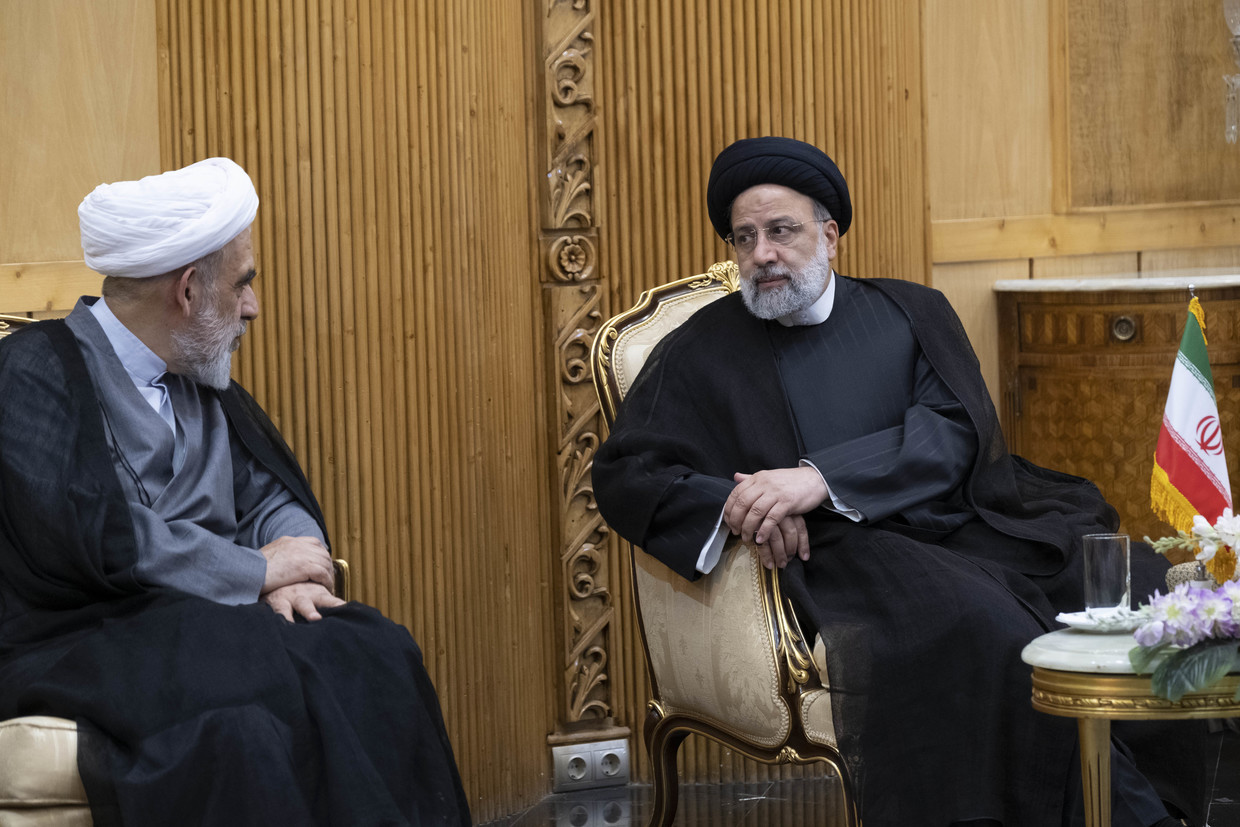
Does Iran want war?
There is no doubt that Iran has a strong military force and can stand up for itself. The country’s population is growing rapidly and has increased by 10 million people over the past 11 years. Many men want to serve in the army, motivated both by active propaganda efforts and government benefits. However, Iran has long refrained from becoming involved in direct combat, and the situation on the border with Lebanon and Syria has remained under control, except for some intense but localized clashes.
Tehran stated that it had nothing to do with the conflict between Hamas and Israel which started after the Palestinian militant group’s attack on October 7, and even Israeli representatives have reluctantly admitted they are not directly fighting against Iran. Back in November, during a meeting with Hamas representatives in Tehran, Khamenei told the group that Iran would not go to war with Israel. He said Hamas had not warned Iran about its attack on Israel, and that Tehran does not intend to fight on behalf of the militant group. However, it is ready to provide political support and supply weapons.
This does not mean that Tehran is afraid of war or is not ready for it. Rather, it does not see any reason to enter into a large-scale conflict with Israel. Loud statements by Iranian politicians such as “death to the United States!” or “death to Israel!” should be regarded only as political slogans used to fuel Iran’s present-day ideology. Of course, the current Iranian leadership considers the US and, to a greater extent, Israel, as its opponent and enemy. But this does not mean that Tehran is really trying to destroy both countries. For modern Iran, the Jewish state is only a political player which, according to Iranian imams, oppresses Palestinians.
On the other hand, Tehran is aware that the West Bank does not really support its brethren in Gaza, and Palestinian President Mahmoud Abbas merely utters routine phrases in condemnation of Netanyahu. Consequently, Iran poses a completely natural and logical question – why should it rush to the aid of those who do not want to fight for their own rights and existence? Does it make sense for Iran to be more “Palestinian” than the Palestinians themselves? Incidentally, Iran hasn’t forgotten its own confrontation with Hamas during the “hot phase” of the Syrian civil war, when the militants played along with Israel and sided with the Free Syrian Army, which was opposed to Syrian President Bashar Assad, whom Tehran supported. So in this respect, the situation is quite ambiguous.
Iran is a country with a rich history, and it has always relied on historical memory and its ability to sense the political climate in the region. This has often saved it from falling into traps set by its opponents. In many ways, the Israeli strike on the Iranian consulate looks like a plan to lure Tehran into a trap from which it may never be able to free itself. The Iranian elites are divided on the issue of Israel (as on many others). Khamenei’s inner circle consists of two factions: the army of clerics, and the military generals of the IRGC who influence certain foreign policy decisions. Both sides are quite influential and are supported by different parts of society. There is also Iranian President Ebrahim Raisi who, de jure, is not responsible for the country’s security and foreign policy, but only for the economy and humanitarian issues. However, Khamenei pays attention to Raisi’s opinion. Moreover, after some time, Raisi may succeed Khamenei as Supreme Leader.
The clergy traditionally adopt a “hawkish” position. They want to deal a serious blow to Israel for two reasons. The first is that Iran has a moral right to respond in kind, otherwise the country will not “save face” and this will cause criticism both inside and outside the Islamic Republic. They believe that Iran’s image will seriously suffer, and this will disappoint those who are loyal to Iran. The second reason is that, sensing the weakness of Iran, Israel may repeat such an attack. Moreover, the clergy perceive the strike as a double slap in the face, since it took place on April 1 – the exact day when 45 years ago, in 1979, Iran was declared an Islamic Republic following the referendum and the Islamic revolution. In the east, people are very attentive to symbolism, and Tehran believes that Israel’s actions have demonstrated that it does not respect Iran’s current regime. If Tehran doesn’t retaliate, it may look like Iran is too weak to punish Israel and Khamenei’s words may be taken as yet another “last warning made by Iran.”
https://mf.b37mrtl.ru/files/2024.04/original/661941df2030275fdc170595.jpg
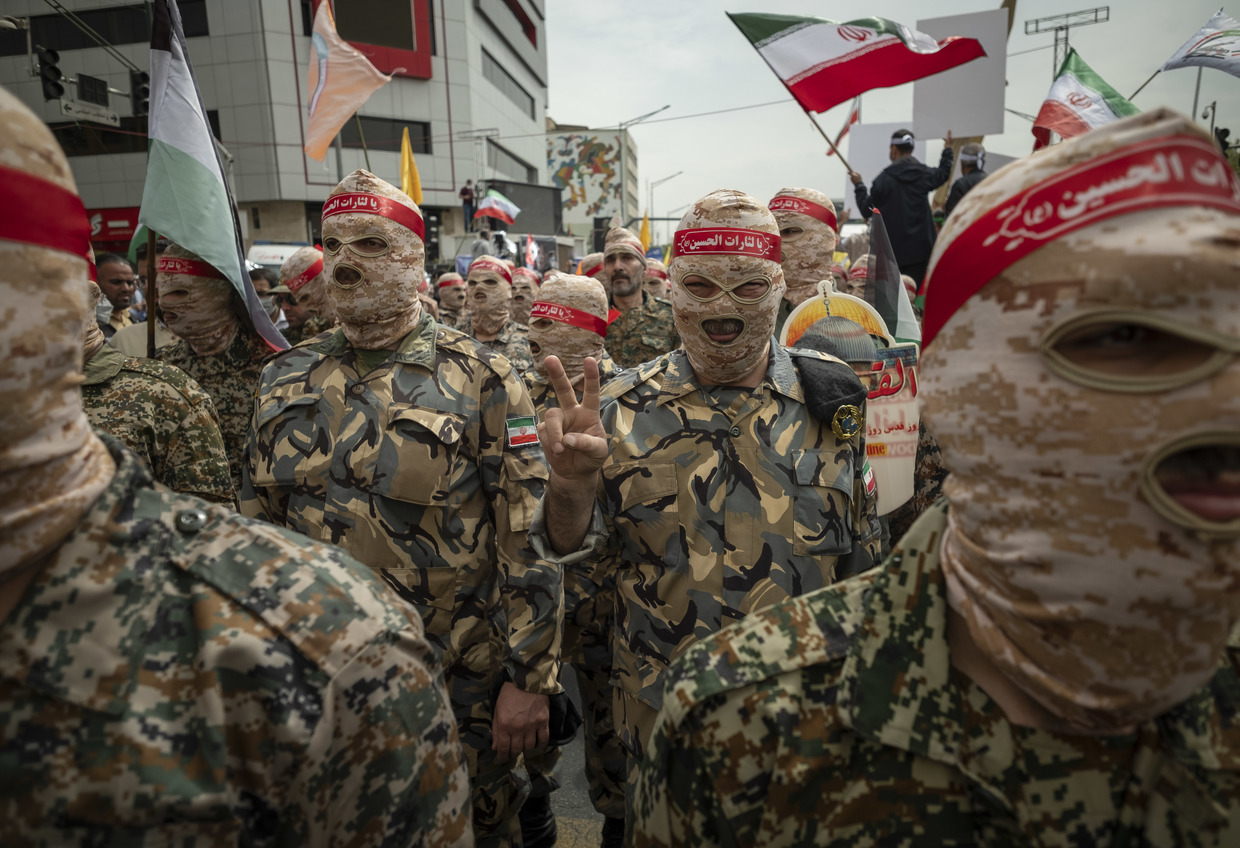
The no less influential IRGC generals are also convinced that Iran should respond, although they believe any retaliation should not lead to the outbreak of a full-scale war. The IRGC is not interested in conflict, because it understands that Netanyahu’s provocative actions may be intended to draw Iran into a big war, which may end badly for Tehran. President Raisi has similar views. Despite the fact that he sides with conservative forces, he is an advocate of harsh words but pragmatic actions. Paradoxically, the development of the Iranian nuclear program also testifies to the country’s efforts to maintain peace. Tehran believes that the presence of nuclear weapons in the country will stop Israel and any other opponents from taking aggressive action against it. In this regard, Iran draws on the experience of North Korea.
Meanwhile, the West has also expressed its opinion regarding the escalation of the conflict. US President Joe Biden said Washington will provide all the necessary assistance to Israel in light of the threat from Tehran and its proxies, noting that its security obligations to the Jewish state are “indestructible.” However, the European Union has actually taken the opposite stance. Brussels condemned Israel’s actions against the Iranian diplomatic mission and called on the parties to show restraint and prevent the further deterioration of the situation in the region. Moreover, the European External Action Service published a press release in which it emphasized the need to respect the principle of inviolability of diplomatic and consular buildings and personnel in all circumstances, in accordance with international law.
This situation has revealed obvious contradictions between the different centers of power in the West. These contradictions between Western countries have become apparent for the first time in the past several years (with the exception of some formal details on the Ukraine conflict). However, both the US and the EU are afraid of a sharp spike in oil prices in the event of a major war between Iran and Israel. Iran is one of the world’s major suppliers of energy resources and a hot war could provoke a large-scale economic crisis – something that Europe clearly wants to avoid. Tehran also believes that in reality, the Biden administration was behind the Israeli provocation, and that the US is merely using Netanyahu to try to eliminate Iran, which refuses to play by the American rules. In other words, Netanyahu could have unwittingly followed a clever plan which the White house devised in order to solve two problems at once and come out victorious.
https://mf.b37mrtl.ru/files/2024.04/original/6619429b85f54054c00be996.jpg
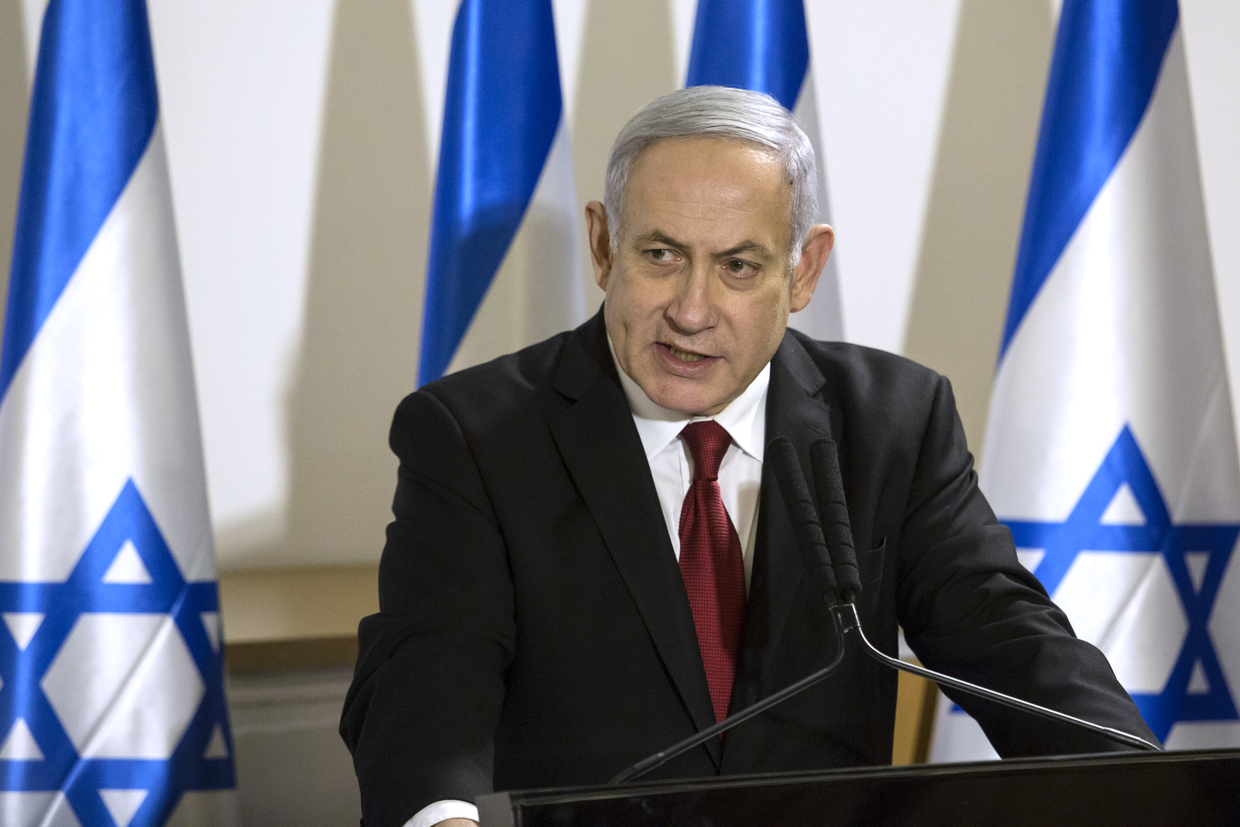
For many years, Iran has avoided getting directly involved in wars. Over the past decade, the authorities have focused on improving the quality of life in the country and fighting sanctions; last year, Iran became a full member of the SCO and BRICS organizations, demonstrating that it is striving for political dialogue. This is why Iran has actively encouraged the formation and development of proxy military forces that would protect its interests in the region. The IRGC wants to use these forces to undertake indirect action against Israel. A retaliatory strike would most likely be carried out by Yemen’s Houthi movement (the Ansar Allah group) and the Lebanese Hezbollah movement. But the Houthis are 2,000km away, which greatly reduces the effectiveness of any attack, and it makes sense to currently preserve Hezbollah’s forces.
Commenting on the attack on the Iranian consulate, Hezbollah leader Hassan Nasrallah said that Tehran would respond to the Israeli strike directly. In his opinion, it was not just an attack on Syria, but also a strike on “Iranian soil.” Nasrallah further argued that it signified a “new level of terror” aimed against “the head of Iranian advisers in Lebanon and Syria.” According to Nasrallah, the Americans and Israelis understand that Iran will soon respond, but the best strategy of resistance would be to avoid “a classic military conflict.” However, what kind of a “direct response” are we talking about if at the same time Nasrallah says that there will be no “classic” – i.e. mirror, or direct – strike? It is most likely that Tehran is still considering various options, considering that it wants to avoid a major conflict by all means.
If Iran enters the conflict directly, this may lead to a long-term escalation of the situation. However, it is quite possible that the IRGC may get involved in the Palestinian-Israeli conflict. In recent days, Iranian Foreign Minister Hossein Amir-Abdollahian held talks with colleagues from the UAE, Saudi Arabia, Iraq, and Qatar. At the same time, Iran’s president had a telephone conversation with Turkish President Recep Tayyip Erdogan. Obviously, if Israel continues its aggression against Iran and the two countries go to war, the entire Muslim world – and that means both adherents of Sunni and Shia Islam – will side with Tehran. Non-Arab countries like Türkiye, Pakistan, and even faraway Indonesia will support Iran as well. Does Netanyahu – who has faced criticism even in the West for his failures and rash actions in Gaza – really want to turn the entire Islamic world against Israel? That is unlikely.
Meanwhile, Israel has temporarily suspended the work of 28 diplomatic missions around the world. Consulates have been closed to the public in Baku, Yerevan, and Alma-Ata for an indefinite period of time. Israel has also decided to limit the number of visitors to its embassy in Russia. These measures have been implemented for security reasons – to safeguard the Israeli diplomatic missions from possible Iranian attacks. In other words, Israel has indirectly made it clear that the territories of Azerbaijan and Armenia – which share a border with Iran – may be attacked by Iran. In this case, the conflict could escalate from a local to a global level. However, it is unlikely that Iran would be interested in this.
In the past few days, Netanyahu, Israeli Defense Minister Yoav Gallant, and Chief of the General Staff of the IDF Herzi Halevi have stated that their country is ready to handle any scenario of Iranian retaliation. Perhaps Netanyahu believes that the Islamic world’s support of Tehran will be limited to words – which may be true. But in such circumstances, taking risks may lead to highly unpredictable consequences. So far, both sides have only attempted to aggravate the situation. The further course of events will largely depend on Iran’s response.
By Farhad Ibragimov, lecturer at the Economics Faculty of RUDN University, visiting lecturer at the Russian Presidential Academy of National Economy and Public Administration, political analyst, expert on Iran and the Middle East
Erdogan blames Israel for Iranian attack
Western hypocrisy helped bring about an escalation, the Turkish leader has said
16 Apr, 2024 18:13 RT
Iran’s first direct attack on Israel is the fault of Israeli Prime Minister Benjamin Netanyahu first and foremost, Turkish President Recep Tayyip Erdogan has said. In a televised address after a cabinet meeting in Ankara, Erdogan said it was unfair to look at last Saturday’s events in a vacuum.
“The one chiefly responsible for the tension that gripped our hearts on the evening of April 13 is Netanyahu and his bloody administration,” he said. “Since October 7, the Israeli government has opted for provocative moves in order to spread the fire to the entire region. The Israeli government targeted the Iranian consulate in Damascus, violating international law and the Vienna Convention, and that was the last straw,” added Erdogan.
Tehran’s diplomatic mission was struck on April 1, killing seven high-ranking officers of the Islamic Revolutionary Guard Corps (IRGC) Quds Force, including two generals. Israel never officially claimed responsibility for the strike, but has repeatedly bombed Syria, claiming preemptive self-defense from the Iranian presence there. “We have seen the double-standard approach of Western countries,” Erdogan said, pointing out that only a handful of countries condemned Israel’s move, but rushed to denounce Iran’s response.
Tehran eventually launched scores of drones and missiles against targets inside Israel. The US, UK, France and Jordan helped the Israelis with air defense but some of the projectiles got through, causing unspecified damage. Erdogan also blamed Israel for the current conflict in general, saying its forces have “indiscriminately” killed tens of thousands of Palestinian civilians in Gaza, including people standing in line for humanitarian aid.
“For more than 132 days, Israel has been implementing genocidal policies,” the Turkish leader claimed. Netanyahu declared war on Gaza-based Hamas after the Palestinian militant group raided nearby Israeli villages and military bases last October. Much of Gaza has since been reduced to rubble and its civilian population pushed to the edge of starvation. A recent report by UN Human Rights Council special rapporteur Francesca Albanese has accused Israel of intending to commit genocide in the enclave.
*******
Night Watchman
Paul Rolland
Night Watchman Ministries
Make Your (7) Decision for Christ NOW!!!!!!! Time is Up!!!!!!!
Jesus Christ’s Offer of Salvation:
The ABCs (7) of Salvation through Jesus Christ (the Lamb)
- (7) Admit/Acknowledge/Accept that you are sinner. Ask (7) God’s forgiveness and repent of your sins.
. . . “For all have sinned, and come short of the glory of God.” (Romans 3:23).
. . . “As it is written, There is none righteous, no, not one.” (Romans 3:10).
. . . “If we say that we have no sin, we deceive ourselves, and the truth is not in us.” (1 John 1:8).
B. Believe Jesus is Lord. Believe that (7) Jesus Christ is who He claimed to (7) be; that He was both fully God (7) and fully man and that we are (7) saved through His death, burial, and resurrection. (7) Put your trust in Him as your (7) only hope of salvation. Become a son (7) or daughter of God by receiving Christ. (7777777) 7×7
. . . “That whosoever believeth in him should not perish, but have eternal life. For God so loved the world, that he gave his only begotten Son, that whosoever believeth in him should not perish, but have everlasting life. For God sent not his son into the world to condemn the world; but that the world through him might be saved. (John 3:15-17). For whosoever shall call upon the name of the Lord shall be saved.” (Romans 10:13).
C. Call upon His name, Confess (7) with your heart and with your lips (7) that Jesus is your Lord and Savior.
. . . “That if thou shalt confess with thy mouth the Lord Jesus, and shalt believe in thine heart that God hath raised him from the dead, thou shalt be saved. For with the heart man believeth unto righteousness; and with the mouth confession is made unto salvation.” (Romans 10:9-10).
. . . “If we say that we have no sin, we deceive ourselves, and the truth is not in us. If we confess our sins, he is faithful and just to forgive us our sins, and to cleanse us from all unrighteousness. If we say that we have not sinned, we make him a liar, and his word is not in us.” (John 1:8-10).
. . . “And he is the propitiation for our sins: and not for ours only, but also for the sins of the whole world. (John 2:2).
. . . “In this was manifested the love of god toward us, because that God sent his only begotten Son into the world, that we might live through him. And we have seen and do testify that the Father sent the Son to be the Saviour of the world. Whosoever shall confess that Jesus is the Son of God, God dwelleth in him, and he in God.” (1 John 4:9, 14-15).
. . . “But God commendeth his love toward us, in that, while we were yet sinners, Christ died for us. Much more then, being now justified by his blood, we shall be saved from wrath through him. For if, when we were enemies, we were reconciled to God by the death of his Son, much more, being reconciled, we shall be saved by his life.” (Romans 5:8-10).
. . . “For the wages of sin is death; but the gift of God is eternal life through Jesus Christ our Lord.” (Romans 6:23).
. . . “Jesus saith unto them, I am the way, the truth, and the life, no man cometh unto the Father, but by me.” (John 14:6).
. . . “For I am not ashamed of the gospel of Christ: for it is the power of God unto salvation to everyone that believeth.” (Romans 1:16).
. . . “Neither is there salvation in any other: for there is none other name under heaven given among men, whereby we must be saved.” (Acts: 4:12).
. . . “Who will have all men to be saved, and to come unto the knowledge of the truth for there is one God, and one mediator between God and men, the man Christ Jesus.” (1 Timothy 2:4-6).
. . . “For God did not appoint us to suffer wrath but to receive salvation through our Lord Jesus Christ.” (1 Thessalonians 5:9).
. . . “But as many as received him, to them gave the power to become the sons of God, even to them that believe on his name.” (John 1:12).
True Church / Bride of Christ Spared from God’s Wrath:
Romans 5:8-10. “But God commendeth his love toward us, in that, while we were yet sinners, Christ died for us. Much more then, being now justified by his blood, we shall be saved from wrath through him. For if, when we were enemies, we were reconciled to God by the death of his Son, much more, being reconciled, we shall be saved by his life.”
Romans 12:19. Dearly beloved, avenge not yourselves, but rather give place unto wrath: for it is written, Vengeance is mine; I will repay, saith the Lord.
1 Thessalonians 1:10. And to wait for his Son from heaven, whom he raised from the dead, even Jesus, which delivered us from the wrath to come.
1 Thessalonians 5:9. For God hath not appointed us to wrath, but to obtain salvation by our Lord Jesus Christ,
Romans 8:35. Who shall separate us from the love of Christ? shall tribulation, or distress, or persecution, or famine, or nakedness, or peril, or sword?
Jeremiah 30:7. Alas! for that day is great, so that none is like it: it is even the time of Jacob’s trouble, but he shall be saved out of it.
Revelation 3:10 Because thou hast kept the word of my patience, I also will keep thee from the hour of temptation, which shall come upon all the world, to try them that dwell upon the earth.