
Major Natural Disasters United States 2024: Does the U.S. need a ‘Category 6’ hurricane rating?
AccuWeather hurricane experts warn of a ‘super-charged hurricane season”
AccuWeather Chief Meteorologist Jon Porter warns of the potential for an unusually active 2024 Atlantic hurricane season.
Do we need a ‘Category 6’ hurricane rating? (msn.com)
Unprecedented Warmth in Atlantic Hurricane Alley Sparks Concern for Upcoming Season
Story by Lily Green
As the tropical Atlantic Ocean experiences summer-like temperatures in the depths of February, meteorologists are growing increasingly concerned about the implications for the upcoming hurricane season. The region commonly known as ‘hurricane alley’ is currently as warm as it would typically be in mid-July, which is a startling deviation from the norm.
The historical highs recorded since the beginning of 2023 across the northern Atlantic Ocean have been alarming. Such exceptional warmth has the potential to provide abundant fuel for tropical systems as hurricane season draws near. The Atlantic has been stewing for over a year, contributing to an above-average hurricane season in 2023, defying expectations even in the face of an El Niño climate pattern, which traditionally suppresses Atlantic cyclone formation.
The Gulf of Mexico has not been spared from this warming trend. The area has witnessed its warmest start to the year on record since satellite monitoring began in 1981. This marine heatwave has had severe consequences, from record-breaking heat indices in the southern United States to ecological impacts like coral bleaching and dead zones in marine habitats. The warmth of the Gulf waters is particularly crucial for hurricane development, as temperatures above 80 degrees Fahrenheit fuel the hurricane heat engine, leading to more intense and faster-developing storms.
Meteorologists are eyeing the possibility that the La Niña climate pattern could take over by late summer or early fall, which traditionally heralds a more active hurricane season in the Atlantic. This potential shift, combined with the present oceanic warmth, raises the likelihood of another busy hurricane season. The main development region of the Atlantic, where many hurricanes are born, has seen sea surface temperatures run significantly above average. Should this trend continue into hurricane season, it could result in a prime environment for the development of cyclones.
Despite these ominous signs, it remains too early to predict with certainty the impact this warmth will have on the hurricane season. Changes to hurricane forecast models and warnings are also underway to better communicate risks to coastal and inland residents. The National Hurricane Center is set to introduce an experimental cone around mid-August that will factor in inland tropical storm and hurricane watches and warnings, helping communities prepare more effectively for potential impacts.
As the tropical Atlantic temperatures continue to chart new territory, both scientists and residents along hurricane-prone coastlines watch with bated breath. While it is too soon to sound the alarm, the record warmth of the Atlantic hurricane alley undoubtedly sets the stage for an upcoming hurricane season that demands vigilant attention
Atlantic Hurricane Alley Sees Ominous Mid-July Heat In February
Temperatures in a part of the tropical Atlantic Ocean commonly called ‘hurricane alley’ are as warm right now as they usually are in the middle of July—and it’s only the middle of February.
Waters across the northern Atlantic Ocean have been running at historic highs since 2023, but the extent of the warmth down in the tropical Atlantic is cause for concern heading into the summer.
Such astounding warmth could provide ample fuel for tropical systems to roar as we approach hurricane season in a couple of months.
DON’T MISS: Global ocean record snowballs into 2024, major hurricane impacts looming
The Atlantic Ocean has been stewing for over a year
The world’s oceans have been running a fever for more than a year now. Record warmth in the Atlantic, as well as a strong El Niño in the eastern Pacific, helped vault global sea surface temperatures to unprecedented heights in 2023.
It’s a trend that hasn’t slowed down so far in 2024, either, with January’s average ocean temperatures coming in closer to what you’d expect to see in mid-May. Things have only gotten worse in the Atlantic Ocean, which has been running a formidable fever in its own right.
Widespread record-warm sea surface temperatures across the Atlantic helped drive an above-average 2023 hurricane season against all odds. Those warm waters have even boosted snowstorms across the East Coast.
Tropical Atlantic hits summer-like warmth in February
The extent of unprecedented warmth is even more harrowing farther out to sea. Hurricane forecasters spend the winter and spring months closely watching water temperatures in the Atlantic’s Main Development Region (MDR), the vast stretch between the Lesser Antilles and western Africa.
Tropical disturbances moving out of western Africa tend to develop as they roll across the Atlantic’s MDR, lending this region the nickname ‘hurricane alley’ during the height of the season in August and September.
Hurricane expert Michael Lowry compiled sea surface temperature data for the Atlantic’s MDR and found that average sea surface temperatures across the region clocked in warmer than 26°C on Valentine’s Day. That’s a few degrees warmer than average for the middle of February, and a level of warmth you’d expect to see in the middle of July.
It’s easy to lose sight of how incredible this kind of warmth is. Breaking water temperature records is tough in part due to water’s high heat capacity. It takes a while for sea surface temperatures to warm up and cool down.
Temperatures running several degrees above normal is also a big deal. Take El Niño, for instance, which can have a profound effect on global weather patterns with sea surface temperatures just 0.5°C warmer than normal.
Historic warmth could portend a stressful hurricane season
Scale-topping warmth in the Atlantic Ocean could provide plenty of fuel for tropical systems to develop this season.
Hurricanes gather strength when winds evaporate a tiny layer of water off the surface of the ocean. That steamy water vapour rises into the clouds and releases its heat, feeding energy into the thunderstorms around the eye of the hurricane. Warmer waters can allow this process to go into overdrive, sometimes rapidly strengthening a hurricane in just a few hours.
RELATED: How hot water fuels the world’s most powerful hurricanes
We’re also facing the likelihood of the eastern Pacific’s El Niño giving way to the cooler-than-normal waters of La Niña by the peak of this year’s hurricane season. La Niña reduces destructive wind shear blowing over the Atlantic, which can make conditions even more favourable for budding tropical systems to take root and develop.
Combined, these factors could lead to an active hurricane season across the Atlantic basin heading into this summer. It’s never too early to make sure your home hurricane kits are well stocked and ensure you’ve got plans in place to deal with storms long before they ever develop.
WATCH: How hot water helps hurricanes gather strength with frightening speed
Do We Need A Category 6 For Hurricanes? Our Experts Weigh In.
By Jan Wesner Childs February 08, 2024 weather.com
A conversation popped up recently in one of our daily staff weather briefings:
Should a Category 6 be added to the Saffir-Simpson Hurricane Wind Scale, which currently tops out at Cat 5?
The discussion was brought on by new research from Michael Wehner and James Kossin, well-respected scientists in the field of extreme weather and climate change.
Their paper, published Monday in the journal PNAS, doesn’t propose any actual changes. It merely poses the idea as a way to draw attention to climate change and the ways it’s making strong hurricanes even more dangerous.
While the research is just for awareness, we sat down with our expert team of meteorologists from weather.com and The Weather Company to talk about the whole idea of Category 6 hurricanes, stronger storms and keeping people safe.
https://s.w-x.co/util/image/w/Saffir%20Simpson%20Scale%202023.png
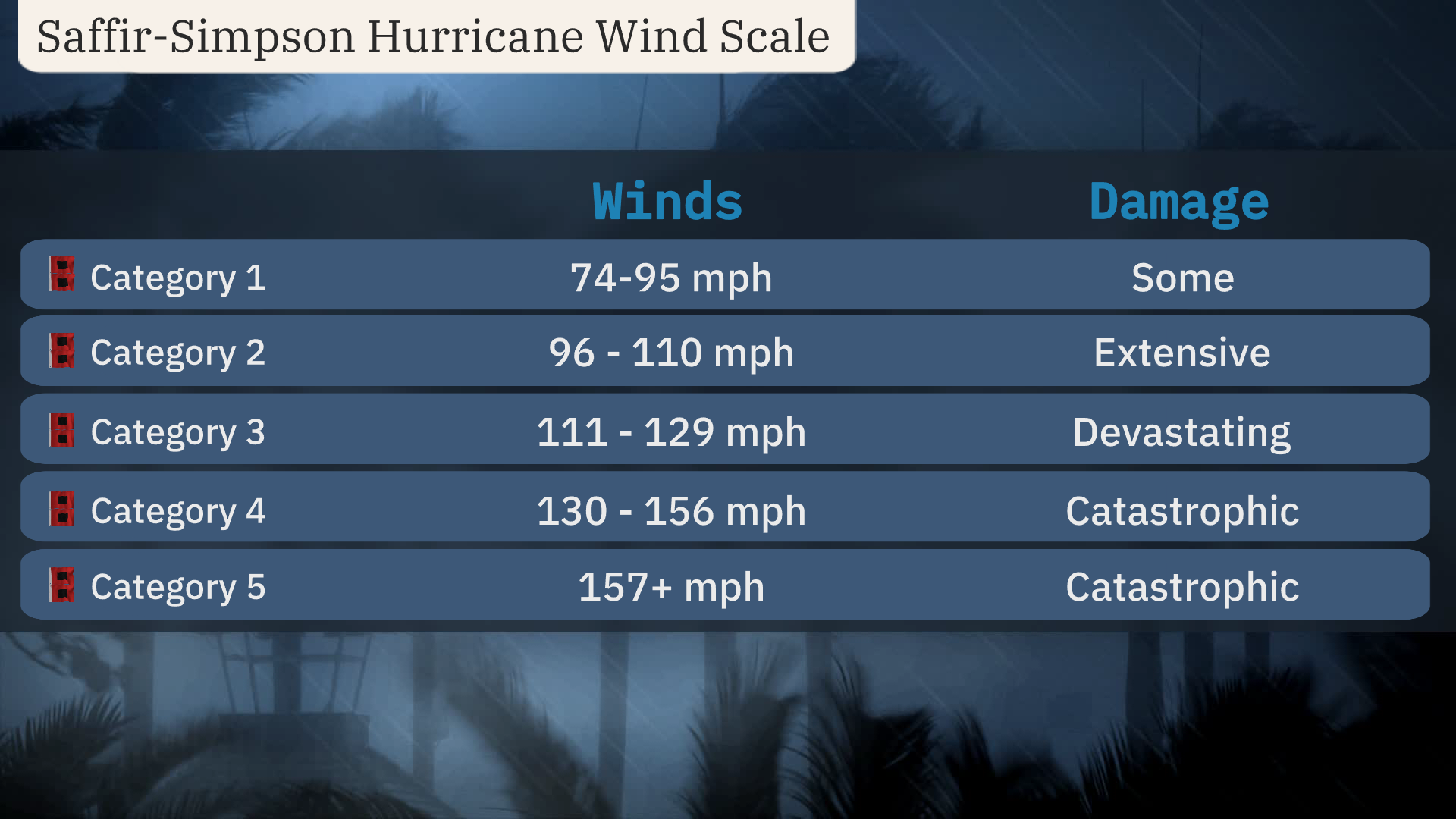
The Saffir-Simpson Hurricane Wind Scale includes five categories that predict a hurricane’s wind damage.
Adding to the Saffir-Simpson scale has been debated for years, with the point being made that there is a potential for storms much stronger than the 157 mph criteria that is the minimum definition of a Cat 5. Thoughts?
Linda Lam: One of the concerns I have with a Category 6 is that categories in general indicate wind speed and nothing about water hazards, which are typically the most important impact and the deadliest aspect of a tropical cyclone.
Chris Dolce: Setting apart the strongest Category 5 hurricanes into a separate Category 6 might be useful for scientists to track statistically in a warming world, but I’m not sure the public needs another layer to interpret. Category 5 rated hurricanes are described as producing catastrophic wind damage, which is already pretty dire wording for the public.
Jon Erdman: On one hand, there is an argument to be made that, for example, 215 mph Hurricane Patricia in 2015 seemed to have been in another realm from a 160 mph Cat. 5. However, as Chris pointed out, the NHC describes Cat. 5 wind damage as “catastrophic.” So, what would Cat. 6 wind damage be? How do you get more damaging than “catastrophic?”
(MORE: Not Just The Category: 2 Other Things You Should Know About Hurricanes and Tropical Storms)
Jonathan Belles: One worry I have with this is that we’ll be focusing even more energy on wind speeds, while rainfall flooding can cause deaths thousands of miles away from the coast where no category is attached. Look at 2021’s Ida. Many of the fatalities and much of the damage were in the Northeast and well removed from when the storm was a Category 4 along the Louisiana coastline.
Briana Waxman: The other mets summed up my thoughts very well! The only thing I would add is my strong opinion that we should scrap the current scale and re-do it with hazards/impacts in mind rather than just add another category to an already flawed measurement system.
Peter Neilley: The inclusion of a new Category 6 in the Saffir-Simpson scale is needed and appropriate given the fact that the winds in tropical cyclones can and are becoming more intense in a changing climate. However, it’s important to reiterate that as individual storms threaten, there are many other factors besides hurricane category that will strongly influence the impact a storm has on you, and one needs to pay attention to all these factors. These other factors include precise storm path relative to you, storm surge and surf heights, total rainfall expected and inland stream and river flooding potential, and the threat of embedded tornadoes.
(MORE: Is There A Difference Between A Super Typhoon And A Hurricane?)
Danielle Banks: The beauty of studies like the one by Wehner and Kossin is that whether you agree or disagree with these concepts, they spark much needed conversations in the meteorological community. At the end of the day, every scientist who is weighing in, no matter what their specialty, is giving their opinion because they deeply care about saving lives and want to put out the best messaging possible in order to help people make better decisions.
Kait Parker: The authors of the recent study achieved their goal of sparking a conversation on how we look at storms of the future. We know climate change is pushing our new strongest storms to be even stronger but focusing on the Saffir-Simpson scale neglects the tremendous list of worsening impacts.
https://s.w-x.co/util/image/w/CAT%205%20landfalls%20%281%29.png
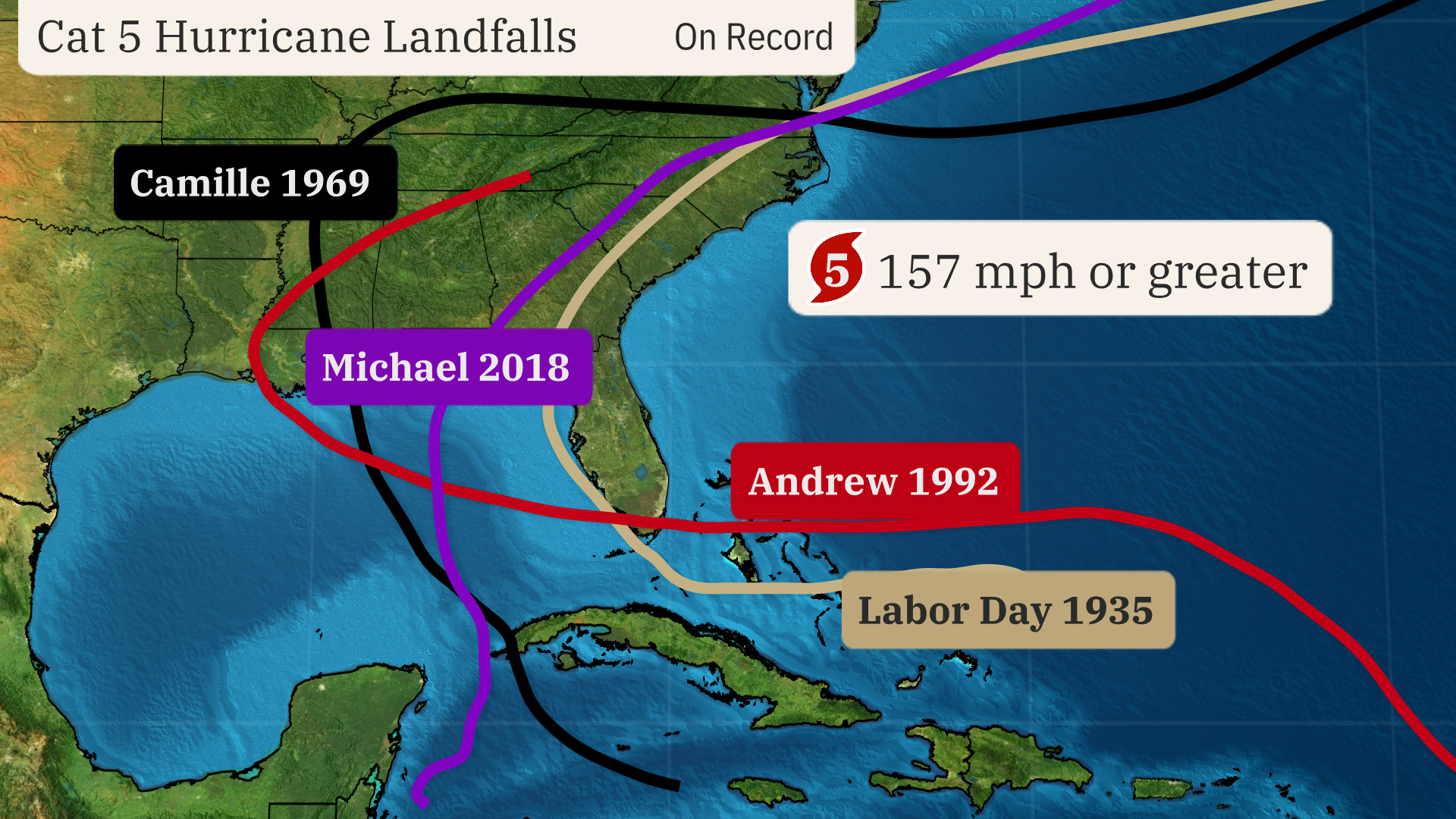
The National Hurricane Center weighed in on Tuesday, saying there are no plans to add Category 6, in part because the scale isn’t a very effective tool. But what changes do need to be made in terms of messaging to the public, especially as climate change ramps up the danger for millions of people both along coastlines and far inland?
Dolce: What’s sorely needed from a communication standpoint are improvements in how we convey the various dangers hurricanes pose, not just from wind, but equally as important are their storm surge and flooding rainfall threats.
(MORE: Why the Projected Path For Hurricanes, Tropical Storms Doesn’t Always Tell the Full Story)
Belles: We need to incorporate storm surge and rainfall flooding threats into our messaging as best we can. Water threats make up the vast majority of fatalities in this country and those threats are worsening in a warmer world. As social scientists and meteorologists, the tall task that we have ahead of us is to mush all of this into a one-to-five scale. An attempt at this was made in the 2000s based on wind speeds and the size of a hurricane, which is a proxy for likely storm surge. That scale was called the Integrated Kinetic Energy scale. But its fatal flaw was that it was more difficult to calculate and harder to communicate.
Neilley: [Threats besides wind] can vary widely from storm to storm, and may not be well correlated with storm category, so it is important to know and consider all of them as one prepares for an impending storm.
https://s.w-x.co/util/image/w/HurricaneIanSatNasa.jpeg
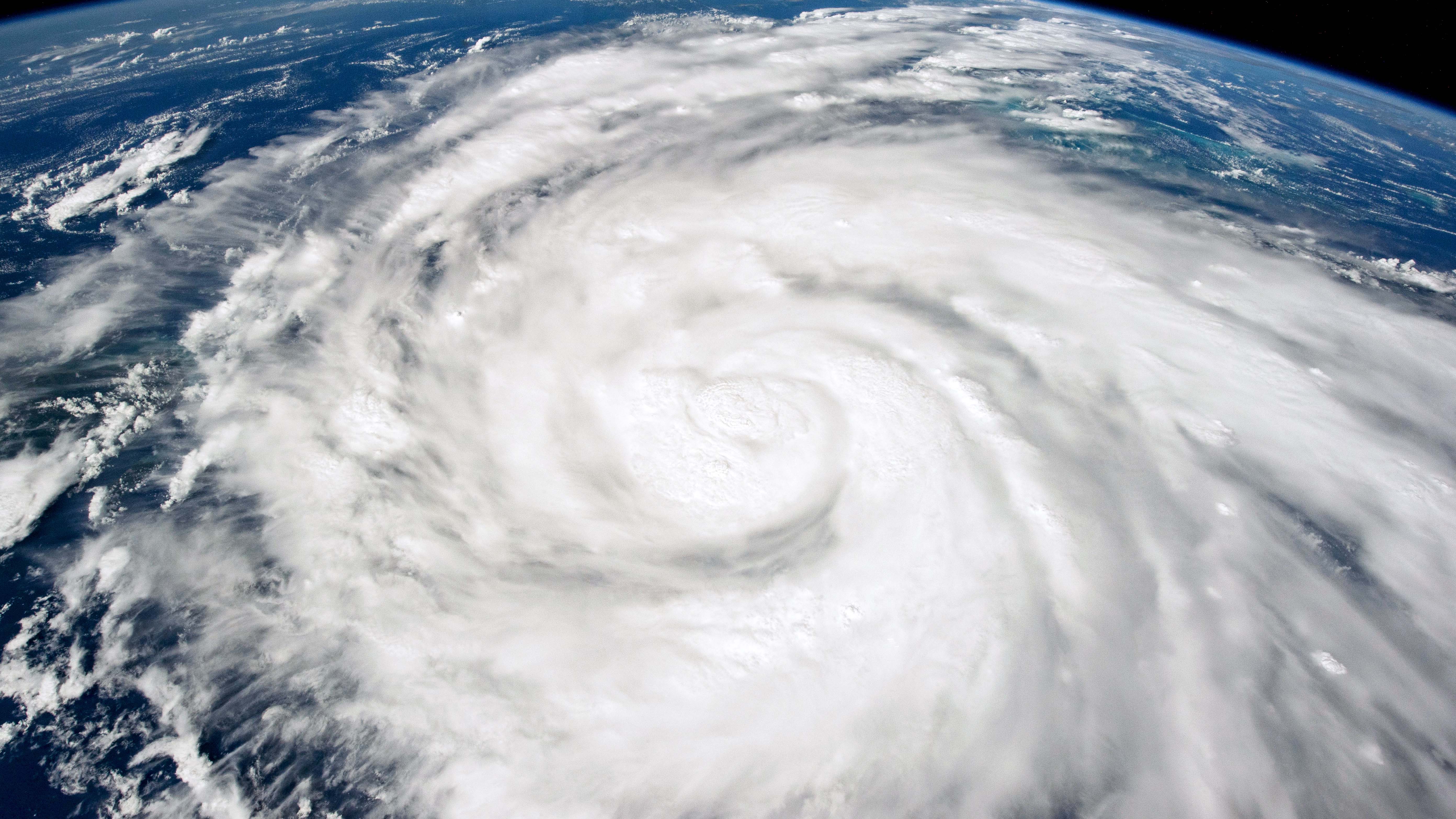
A crew member onboard the International Space Station took this photograph of Hurricane Ian on Sept. 26, 2022, while orbiting more than 250 miles above Earth’s surface. Ian underwent rapid intensification, something scientists say is happening more often due to climate change.
(NASA Earth Observatory)
What could be some direct repercussions of adding a Category 6?
Lam: I also fear that if there is a Category 6 that people will take lower categories, like a Category 3, less seriously. We try to emphasize impacts over category in our messaging and that is a challenge since the easy category number is often a focus instead of the specific details of what to expect.
Dina Knightly: If a Category 6 was added, I feel like there may be more confusion about what category means what. As meteorologists, we know what to expect with classifications, but most people are used to a certain scale. To alter that may confuse people and we may lose the urgency of our message.
Dolce: Categories sometimes don’t illustrate to the public the full story when it comes to impacts. An example in the past that comes to mind is Hurricane Ike in 2008, which had Category 2 winds on approach to Texas, but because it was so large in size it produced a massive, devastating storm surge along the Bolivar Peninsula. Florence in 2018 and Matthew in 2016 come to mind as recent hurricanes that made landfall at Category 1 wind strength, but both produced massive rainfall flooding in the Carolinas.
(MORE: Hurricane Season Terms You Need to Know)
Belles: I don’t think we can say this enough: Adding a new category adds new focus to just one hazard that hurricanes bring, and a very rare echelon of hurricanes at that.
Erdman: I don’t think it would matter in the grand scheme of communication to the public. A Cat. 5 hurricane’s winds are already life-threatening and devastating if they occur at landfall. And, as others mentioned, slower-moving tropical depressions or storms may have much weaker winds, but could have “Category 5 or 6 rainfall flood potential.” Tropical Storm Allison, and its remnant, in 2001 was the poster child for that.
https://s.w-x.co/util/image/w/gettyimages-53537121.jpg
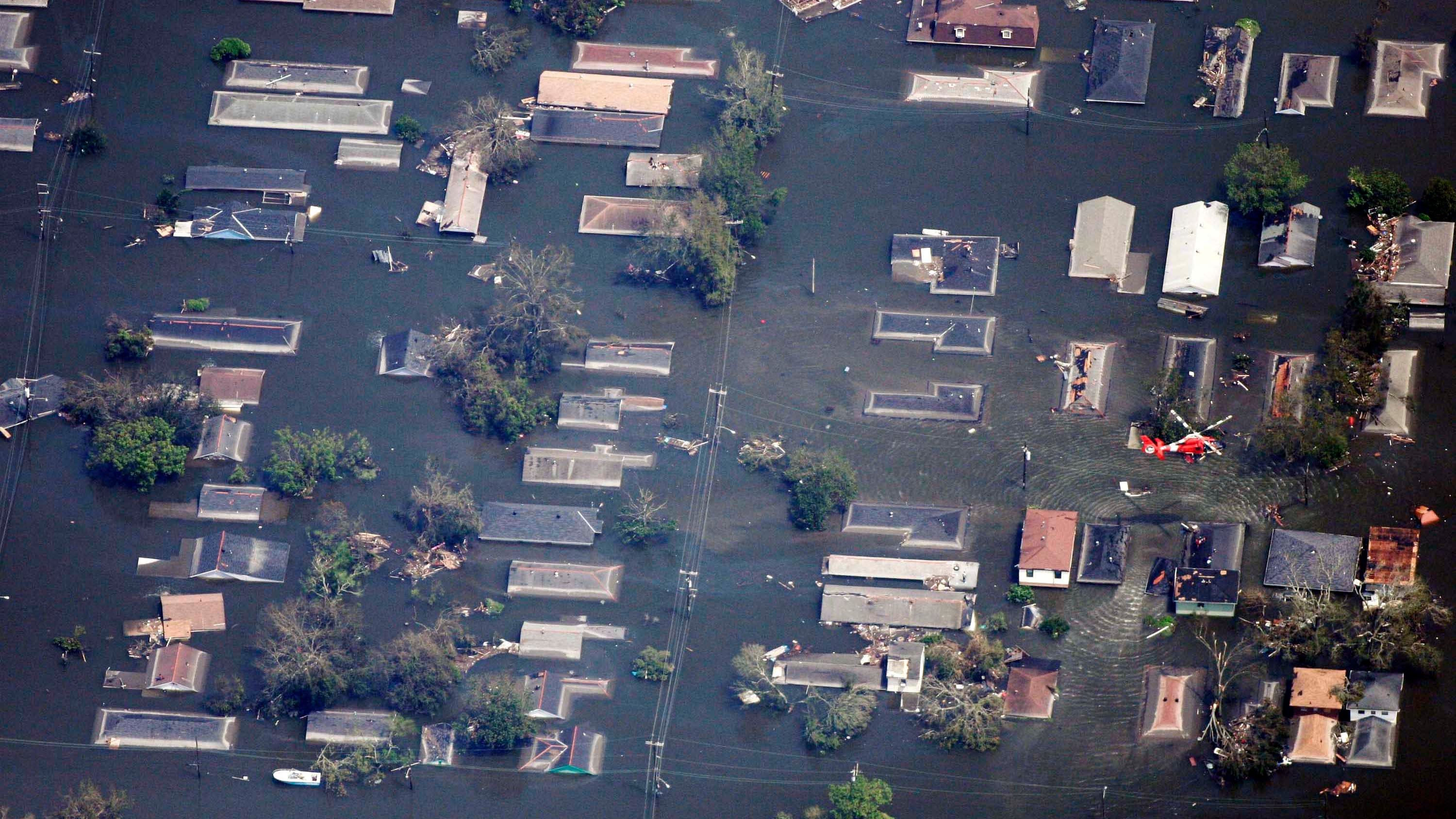
IN FLIGHT- AUGUST 30: A US Coast Guard helicopter passes over a flooded neighborhood east of downtown New Orleans August 30, 2005 in flight over Louisiana. Approximately 100 people are feared dead and estimates put the property loss at nearly $30 billion as Hurricane Katrina could become the costliest storm in US history. It is estimated that 80 percent of New Orleans is under flood waters as levees begin to break and leak around Lake Ponchartrain.
(Photo by Dave Einsel/Getty Images)
We know that climate change is fueling stronger hurricanes, more coastal flooding and erosion and spreading impacts further inland. What does this mean for our future?
Erdman: Have you noticed the number of “rapidly intensifying” storms in recent years? The underforecasted nightmare scenario of Hurricane Otis last October in Acapulco, Mexico, was only the latest example. With global ocean temperatures smashing records last year – including the tropical Atlantic Basin – that’s an unsettling sign for future tropical cyclone potential to both rapidly strengthen and become intense more often.
Parker: Yes, our maximum sustained winds may be topping out higher than we may have expected decades ago. But we also have unprecedented rainfall in tropical systems including ones that may not even be designated a hurricane, storm surge that reaches farther inland due to sea level rise and rapid intensification that is becoming increasingly common. Like Briana suggested, perhaps we need an entirely new way of categorizing the risks of tropical cyclones and forget Saffir-Simpson altogether.
Weather.com reporter Jan Childs covers breaking news and features related to weather, space, climate change, the environment and everything in between.
The Weather Company’s primary journalistic mission is to report on breaking weather news, the environment and the importance of science to our lives.
*******
In His Service,
Night Watchman
Paul Rolland
Night Watchman Ministries
Make Your (7) Decision for Christ NOW!!!!!!! Time is Up!!!!!!!
Jesus Christ’s Offer of Salvation:
The ABCs (7) of Salvation through Jesus Christ (the Lamb)
- (7) Admit/Acknowledge/Accept that you are sinner. Ask (7) God’s forgiveness and repent of your sins.
. . . “For all have sinned, and come short of the glory of God.” (Romans 3:23).
. . . “As it is written, There is none righteous, no, not one.” (Romans 3:10).
. . . “If we say that we have no sin, we deceive ourselves, and the truth is not in us.” (1 John 1:8).
B. Believe Jesus is Lord. Believe that (7) Jesus Christ is who He claimed to (7) be; that He was both fully God (7) and fully man and that we are (7) saved through His death, burial, and resurrection. (7) Put your trust in Him as your (7) only hope of salvation. Become a son (7) or daughter of God by receiving Christ. (7777777) 7×7
. . . “That whosoever believeth in him should not perish, but have eternal life. For God so loved the world, that he gave his only begotten Son, that whosoever believeth in him should not perish, but have everlasting life. For God sent not his son into the world to condemn the world; but that the world through him might be saved. (John 3:15-17). For whosoever shall call upon the name of the Lord shall be saved.” (Romans 10:13).
C. Call upon His name, Confess (7) with your heart and with your lips (7) that Jesus is your Lord and Savior.
. . . “That if thou shalt confess with thy mouth the Lord Jesus, and shalt believe in thine heart that God hath raised him from the dead, thou shalt be saved. For with the heart man believeth unto righteousness; and with the mouth confession is made unto salvation.” (Romans 10:9-10).
. . . “If we say that we have no sin, we deceive ourselves, and the truth is not in us. If we confess our sins, he is faithful and just to forgive us our sins, and to cleanse us from all unrighteousness. If we say that we have not sinned, we make him a liar, and his word is not in us.” (John 1:8-10).
. . . “And he is the propitiation for our sins: and not for ours only, but also for the sins of the whole world. (John 2:2).
. . . “In this was manifested the love of god toward us, because that God sent his only begotten Son into the world, that we might live through him. And we have seen and do testify that the Father sent the Son to be the Saviour of the world. Whosoever shall confess that Jesus is the Son of God, God dwelleth in him, and he in God.” (1 John 4:9, 14-15).
. . . “But God commendeth his love toward us, in that, while we were yet sinners, Christ died for us. Much more then, being now justified by his blood, we shall be saved from wrath through him. For if, when we were enemies, we were reconciled to God by the death of his Son, much more, being reconciled, we shall be saved by his life.” (Romans 5:8-10).
. . . “For the wages of sin is death; but the gift of God is eternal life through Jesus Christ our Lord.” (Romans 6:23).
. . . “Jesus saith unto them, I am the way, the truth, and the life, no man cometh unto the Father, but by me.” (John 14:6).
. . . “For I am not ashamed of the gospel of Christ: for it is the power of God unto salvation to everyone that believeth.” (Romans 1:16).
. . . “Neither is there salvation in any other: for there is none other name under heaven given among men, whereby we must be saved.” (Acts: 4:12).
. . . “Who will have all men to be saved, and to come unto the knowledge of the truth for there is one God, and one mediator between God and men, the man Christ Jesus.” (1 Timothy 2:4-6).
. . . “For God did not appoint us to suffer wrath but to receive salvation through our Lord Jesus Christ.” (1 Thessalonians 5:9).
. . . “But as many as received him, to them gave the power to become the sons of God, even to them that believe on his name.” (John 1:12).
True Church / Bride of Christ Spared from God’s Wrath:
Romans 5:8-10. “But God commendeth his love toward us, in that, while we were yet sinners, Christ died for us. Much more then, being now justified by his blood, we shall be saved from wrath through him. For if, when we were enemies, we were reconciled to God by the death of his Son, much more, being reconciled, we shall be saved by his life.”
Romans 12:19. Dearly beloved, avenge not yourselves, but rather give place unto wrath: for it is written, Vengeance is mine; I will repay, saith the Lord.
1 Thessalonians 1:10. And to wait for his Son from heaven, whom he raised from the dead, even Jesus, which delivered us from the wrath to come.
1 Thessalonians 5:9. For God hath not appointed us to wrath, but to obtain salvation by our Lord Jesus Christ,
Romans 8:35. Who shall separate us from the love of Christ? shall tribulation, or distress, or persecution, or famine, or nakedness, or peril, or sword?
Jeremiah 30:7. Alas! for that day is great, so that none is like it: it is even the time of Jacob’s trouble, but he shall be saved out of it.
Revelation 3:10 Because thou hast kept the word of my patience, I also will keep thee from the hour of temptation, which shall come upon all the world, to try them that dwell upon the earth.